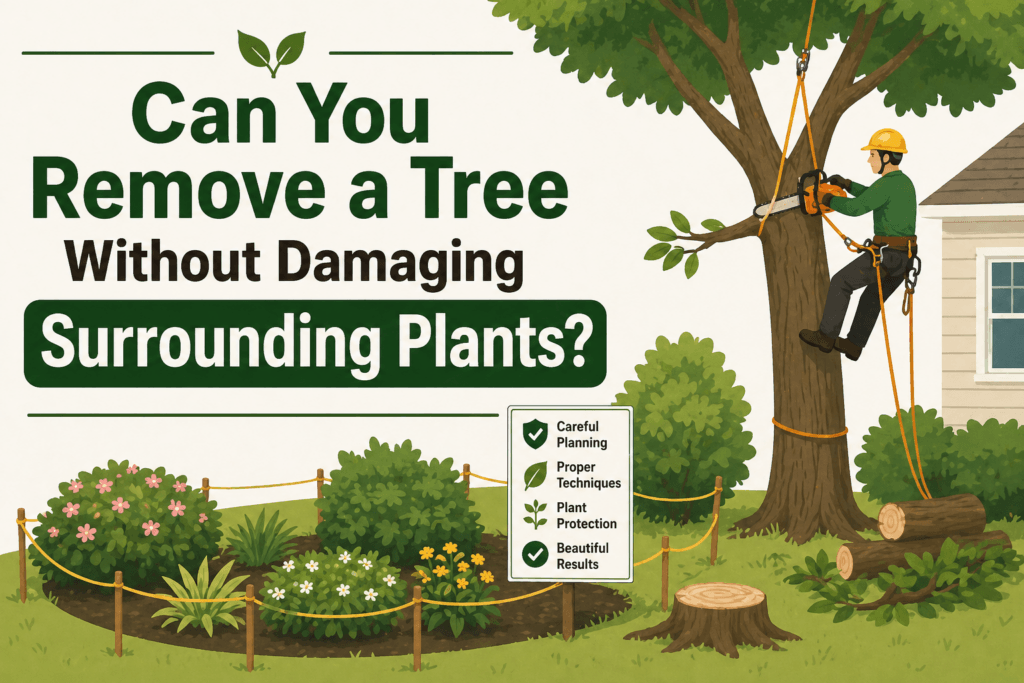
Can You Remove a Tree Without Damaging Surrounding Plants?
Tree removal near plants can often be done with limited landscape damage, but it requires planning, careful access, controlled cutting, and realistic expectations. A tree crew may be able to protect shrubs, flower beds, turf, fences, young trees, garden edges, and nearby landscape features by using ropes, mats, section-by-section removal, and a clear cleanup plan. However, no tree service can honestly guarantee zero impact in every situation, especially when the tree is large, dead, leaning, storm-damaged, or growing directly over delicate plants.
The better question is not only whether a tree can be removed without damaging surrounding plants. The better question is how much risk exists and what steps can reduce that risk. A small tree beside open lawn is very different from a mature tree over a flower bed, hedge, fence line, or newly planted landscape. A good estimate should explain how the crew plans to remove the tree, where debris will fall or be lowered, how equipment will enter the yard, and what the homeowner should move before the job begins.
This guide explains how homeowners can prepare for careful tree removal around plants. It covers risk factors, protection methods, timing, pros and cons, practical questions to ask, and when limited plant damage may be unavoidable. ProCut Tree Service serves Campbell, TX and nearby areas, and this article is written to help homeowners make informed decisions without pressure or unrealistic promises.
Tree Removal Near Plants: Quick Answer
Yes, many trees can be removed while protecting nearby plants, but the success depends on the tree’s size, condition, location, branch spread, equipment access, and the type of plants nearby. Low-growing flowers, young shrubs, ornamental beds, and delicate groundcovers are easier to damage than mature shrubs or open lawn. A careful crew can reduce risk, but homeowners should understand that tree removal is still active work involving falling limbs, sawdust, logs, foot traffic, and equipment movement.
The most protective approach is controlled removal. Instead of dropping large limbs into a bed, the crew may remove branches in smaller sections, use ropes to lower pieces, establish a debris path, place ground protection, and keep heavy equipment away from sensitive areas. These steps can take more time, but they help protect the property.
Homeowners can also help by moving containers, garden decor, hoses, furniture, lighting, birdbaths, and fragile items before the crew arrives. If a prized plant is directly under the tree, ask whether it should be temporarily relocated or covered. Clear communication before the job is one of the best ways to reduce preventable damage.
Why Plant Damage Happens During Tree Removal
Plant damage usually happens for a few predictable reasons. The most obvious is falling material. Limbs, trunk sections, bark, sawdust, and small debris can land on shrubs or beds if the tree is not removed in controlled sections. Even a small branch can break flowers or flatten delicate plants when it falls from height.
Another common issue is foot traffic. Tree work requires crew members to move around the site repeatedly. If the only safe path to the tree crosses a narrow bed or soft soil, plants may be affected unless the path is planned and protected. Equipment can also create soil compaction, especially when the ground is wet.
Root disturbance can matter too. Nearby plants may have shallow roots. Many landscape plants and trees have important roots close to the soil surface, so heavy traffic, digging, grinding, or repeated dragging can stress them. Extension resources often emphasize protecting root zones from compaction and disturbance during construction or heavy site work because roots need air, water, and healthy soil structure to function well.
Finally, cleanup can cause damage if it is rushed. Dragging branches across shrubs, raking aggressively around flower beds, or blowing debris into delicate plants can create problems after the main cutting is finished. A clean job should still be a careful job.
How Tree Crews Protect Landscaping During Removal
There is no single protection method that works for every yard. The right plan depends on the tree and surrounding landscape. A careful tree service should inspect the area and decide how to control falling material, access, debris movement, and cleanup.
1. Section-by-Section Cutting
Instead of dropping the tree in one piece, the crew can remove limbs and trunk sections gradually. This is common when trees are near homes, fences, driveways, or landscaping. Smaller pieces are easier to control and less likely to crush nearby plants.
2. Rope Lowering and Rigging
If branches hang above shrubs, beds, or a roofline, the crew may use ropes to lower limbs instead of letting them fall freely. Rigging requires skill and time, but it can reduce damage risk when working over sensitive areas. This is one reason careful removals may cost more than simple open-yard removals.
3. Ground Protection Mats
Mats, plywood, or temporary ground cover may help protect turf and reduce soil compaction along work paths. This is especially useful when the yard is soft from rain or when equipment must move near landscaped areas. Ground protection does not eliminate all risk, but it can reduce rutting and repeated foot pressure.
4. Clear Drop Zones
A drop zone is the area where limbs or trunk sections are expected to land. If the crew has a clear landing area, the work is usually easier and safer. If a landscape bed sits in the only available drop zone, the crew may need to use ropes, smaller cuts, or hand removal to protect the plants.
5. Temporary Plant Covering
For some low plants, a breathable cloth, tarp, or temporary barrier may help deflect sawdust and small debris. This is not always safe for tall or brittle plants, and covers should not trap heat for long periods. Still, temporary covering can help for short work windows when used carefully.
6. Hand Carrying Debris
Dragging limbs across a garden bed can damage plants. Hand carrying or cutting debris into smaller pieces may protect the landscape, although it increases labor. Ask whether debris will be dragged, carried, chipped, stacked, or hauled through a specific access path.
7. Careful Cleanup
Final cleanup should account for nearby plants. Raking, blowing, and hauling can all affect beds if done carelessly. A homeowner should explain which plants are especially important before work begins so the crew knows where to be extra careful.
Tree Removal Near Plants Planning Table
The table below can help homeowners understand what to discuss before scheduling work.
| Landscape Concern | Possible Protection Step | Question to Ask |
|---|---|---|
| Flower beds under branches | Rope lowering, smaller cuts, temporary cover, or plant relocation. | Will limbs be dropped or lowered? |
| Shrubs near trunk | Hand cutting, careful access, and clear work zones. | Can the crew work around the shrubs safely? |
| Soft lawn or wet soil | Ground mats, plywood, or delayed scheduling after heavy rain. | Will equipment create ruts or compaction? |
| Nearby young trees | Mark protection zones and avoid piling debris near trunks. | How will nearby root zones be protected? |
| Narrow access path | Move obstacles and establish one protected route. | Where will the crew enter and carry debris? |
| Stump inside a bed | Careful grinding, hand cleanup, and clear depth expectations. | Will stump grinding affect nearby roots or plants? |
Should You Move Plants Before Tree Removal?
Sometimes, yes. If small plants, container plants, annual flowers, garden ornaments, potted herbs, or young shrubs are directly below the work zone, moving them before the job can reduce risk. Plants in pots should be moved out of the work area whenever possible. Temporary relocation is often easier than trying to protect fragile plants while limbs are being cut above them.
In-ground plants are more complicated. Moving established shrubs or perennials can create transplant shock, especially during hot weather. If a plant is valuable or sentimental, ask the tree service whether the removal plan can work around it. If not, consider asking a landscaper or gardener whether temporary relocation is realistic.
Homeowners should also move loose items near the tree, including:
- Planters and container plants
- Garden lights and solar stakes
- Hoses and irrigation accessories
- Birdbaths, benches, and decorations
- Patio furniture
- Children’s toys and yard tools
- Vehicles near the access path
These steps do not replace professional care, but they make the job safer and reduce avoidable damage.
Stump Grinding Near Plants
Stump grinding is often where plant protection becomes more detailed. Removing the tree canopy may be one job, but grinding the stump involves a machine working at ground level. If the stump is inside a flower bed, near shrubs, or close to another tree’s roots, the crew should explain what can and cannot be protected.
Grinding can throw chips and disturb the immediate soil area. Nearby plants may need to be covered or temporarily moved. The depth of grinding also matters. A shallow grind may be enough if you only want the stump less visible. A deeper grind may be preferred if you want to replant grass or landscape the area, but it may disturb more soil.
If there are irrigation lines, landscape lighting wires, edging, or buried utilities nearby, tell the tree service before stump grinding begins. Tree services are not always able to see underground features, so homeowners should identify known lines and components in advance.
Best Timing for Careful Tree Removal Around Landscaping
Timing can affect how well surrounding plants are protected. Dry, stable ground is usually better for equipment access than wet, soft ground. After heavy rain, soil can compact more easily, and equipment may leave marks. If the tree is not an emergency, waiting for better ground conditions may help protect the yard.
Season can also matter. During extreme heat, plants may already be stressed, and temporary covering or relocation can increase stress. During active growth, some plants may recover from light disturbance more easily, but delicate flowers may be more vulnerable. During dormancy, certain perennials may be less visible, so marking beds and plant locations becomes important.
Emergency tree work is different. If a tree is leaning toward a home, cracked, storm-damaged, or creating a safety hazard, protection of surrounding plants may be secondary to safety. In those cases, a crew can still work carefully, but preventing property damage or injury comes first.
When Plant Damage May Be Hard to Avoid
A professional tree service should be honest when damage risk is high. Some jobs simply have limited room to work. If the tree trunk grows through a hedge, if limbs cover an entire flower bed, or if the only safe access crosses planted areas, minor plant disturbance may be difficult to avoid.
Damage risk may be higher when:
- The tree is large and directly over delicate plants.
- The tree is dead, brittle, or storm-damaged.
- The yard has limited access for equipment and debris removal.
- Plants are growing tightly around the trunk.
- The stump is inside a planted bed.
- The ground is wet, steep, or soft.
- The job requires emergency removal.
In these situations, the goal becomes damage reduction rather than a promise of no impact. A clear estimate should explain these limitations before work begins.
Does Protecting Plants Increase the Price?
It can. Tree removal near plants may cost more than open-yard removal because it often requires extra time and care. Rope lowering, smaller cuts, hand carrying debris, placing mats, and careful cleanup all take labor. A faster removal may be cheaper, but it may carry more landscape risk.
This does not mean every careful job becomes expensive. If the tree is small and the plants are easy to protect, the difference may be minor. If the tree is large, awkwardly positioned, or surrounded by valuable landscaping, the protection plan may significantly affect the estimate.
When comparing quotes, ask each company how it plans to protect the surrounding plants. A lower price may not include the same level of care. A higher price may be reasonable if the company is planning controlled sectioning, rigging, or more detailed cleanup.
Pros and Cons of Careful Tree Removal Around Plants
| Potential Pros | Potential Cons |
|---|---|
| Reduces risk to shrubs, beds, turf, and nearby young trees. | May take more time than a simple open drop removal. |
| Can preserve landscape design and reduce repair work afterward. | May cost more if rigging, mats, or hand carrying are needed. |
| Allows safer work around homes, fences, and planted areas. | Cannot guarantee zero damage in every high-risk situation. |
| Helps homeowners plan cleanup and replanting more clearly. | May require the homeowner to move items or prepare the yard first. |
For many homeowners, the added planning is worth it. Replacing shrubs, repairing turf, or rebuilding a garden bed can cost time and money. A careful removal plan can reduce those follow-up problems.
Homeowner Checklist Before the Crew Arrives
Use this checklist before scheduled tree removal:
- Take photos of the tree, plants, beds, and access paths before work begins.
- Move potted plants, furniture, garden decor, toys, hoses, and tools.
- Mark irrigation heads, lighting wires, or known underground features.
- Point out plants that are valuable, fragile, or recently planted.
- Ask where limbs, logs, and chips will be staged.
- Confirm whether cleanup and haul-off are included.
- Discuss whether stump grinding will affect nearby plants.
- Keep pets and children away from the work area.
A little preparation can make the job smoother. It also gives the crew a better understanding of what matters most to you.
Questions to Ask Before Hiring
Before hiring a tree service, ask specific questions about the landscape protection plan. General promises are less useful than clear work details.
- Can this tree be removed without dropping large limbs into the planted area?
- Will the crew use ropes or section-by-section removal?
- Where will the access path be?
- Will equipment enter the lawn or garden area?
- Can mats or plywood be used if the ground is soft?
- Should any plants be moved before the job?
- How will debris be carried or hauled away?
- Does stump grinding create additional risk to nearby plants?
- What level of cleanup is included?
- What damage risk remains even with careful work?
These questions are especially helpful if the tree is surrounded by landscaping. The best provider is usually the one that gives practical answers rather than vague reassurance.
Local Tree Service Support in Campbell and Nearby Areas
For homeowners in Campbell, TX and nearby communities, ProCut Tree Service can help review the tree, nearby plants, access route, and cleanup needs before removal begins. A local tree service can explain whether the job is simple, whether surrounding plants need protection, and whether stump grinding should be handled carefully around beds or roots.
For more related information, these ProCut Tree Service resources may help: tree service in Greenville, TX, Greenville tree service, and tree service in Texas.
You can also find additional ProCut Tree Service updates on Pinterest, Blogspot, and Tumblr.
Short Takeaway
Tree removal near plants can often be handled carefully, but it requires realistic planning. A crew may protect surrounding plants by using controlled cuts, ropes, ground protection, clear access paths, hand carrying, and careful cleanup. Homeowners can help by moving fragile items, marking important plants, and discussing concerns before work begins.
The safest answer is not a blanket promise that nothing will be disturbed. The better answer is a clear plan that explains what can be protected, what risks remain, and how the tree will be removed as carefully as possible.
FAQ About Removing a Tree Without Damaging Surrounding Plants
Can you remove a tree without damaging surrounding plants?
Often, yes, especially when the tree is small to medium size, access is good, and the crew can remove limbs in controlled sections. However, zero damage cannot be guaranteed in every situation, especially when the tree is large, hazardous, or directly over delicate plants.
How do tree services protect flower beds during removal?
They may use rope lowering, smaller cuts, temporary covers, hand carrying, and careful cleanup. The best method depends on the tree’s position and the type of plants nearby.
Should I move plants before tree removal?
Potted plants, small containers, and loose garden items should usually be moved. Established in-ground plants may be harder to move, so ask whether they can be protected in place or should be relocated by a landscaper.
Can stump grinding damage nearby plants?
Yes, it can if the stump is close to roots, shrubs, irrigation lines, or planted beds. Ask how deep the stump will be ground and whether nearby plants or underground features need protection.
Does careful tree removal cost more?
Sometimes. Protecting plants may require more time, rope work, smaller cuts, hand hauling, or ground protection. The added cost may be worthwhile if it prevents expensive landscape repair.
What should I tell the tree crew before work starts?
Point out valuable plants, irrigation lines, lighting, garden edging, young trees, soft ground, and any areas you want protected. Clear communication helps the crew plan the safest access and debris path.
What if the tree is an emergency hazard?
If the tree is cracked, leaning, storm-damaged, or threatening a home, safety comes first. A crew can still work carefully, but protecting surrounding plants may be secondary to preventing injury or property damage.
How do I get the most accurate estimate for tree removal near plants?
Provide clear photos of the tree, surrounding plants, access route, fences, structures, and stump area. Ask for a written quote that explains removal method, cleanup, haul-off, stump grinding, and landscape protection.
Request a Careful Tree Removal Estimate
If you need tree removal near plants in Campbell, TX or nearby areas, ProCut Tree Service can review the tree, explain the likely work scope, and discuss ways to reduce landscape damage. Visit ProCut Tree Service or call 903-513-7689 for local tree service support.